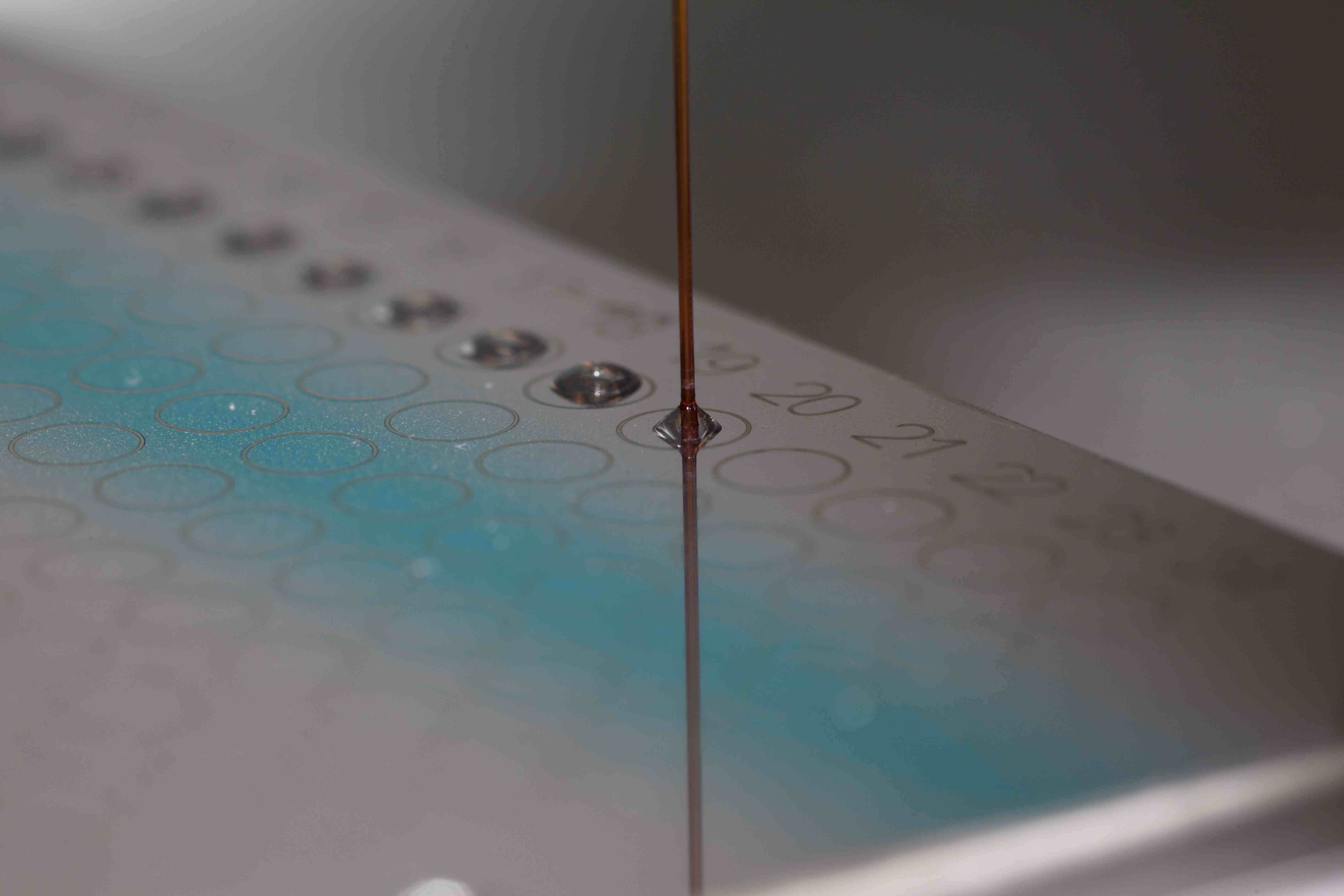
SUMMARY:
• MALDI-MS enables spatial tissue imaging for biomarker discovery and the study of complex samples
• It is a very common technology where the matrix choice and deposition method affect results.
• Microdispensing is very useful since it can be used to optimize the choice of matrix for different samples.
Background
Matrix-Assisted Laser Desorption/Ionization Time-of-Flight Mass Spectrometry (MALDI-TOF MS) has revolutionized the analysis of biomolecules, polymers, and tissue samples. However, its sensitivity and spatial resolution are often limited by sample preparation techniques, particularly the deposition of matrix and analyte materials. Both papers explore innovative microdispensing strategies—inkjet printing and surface patterning—to enhance MALDI-TOF MS performance.
Reasons for Using Microdispensing
Microdispensing offers several advantages:
-
Precision & Control: Enables accurate placement of picoliter volumes, crucial for reproducibility and spatial resolution.
-
Material Efficiency: Minimizes sample and matrix consumption, ideal for rare or expensive analytes.
-
Multiplexing Capability: Allows combinatorial testing of multiple matrices or conditions on a single substrate.
-
Enhanced Sensitivity: Concentrates analytes in defined regions, improving signal-to-noise ratios.
-
Compatibility with Structured Surfaces: Facilitates integration with patterned substrates for high-throughput analysis.
Matrix Screening Process
The Schubert group explored the use of inkjet-based microdispensing to optimize the MALDI-MS process. Using an AutoDrop gantry system, they pursued two approaches:
Delaney et al. (2011) Optimized MALDI matrix conditions on a single tissue sample using inkjet printing with testing different Matrices
Herzer et al. (2009) Develop microstructured MALDI substrates using patterned self-assembled monolayers (SAMs) to microstructure substrates and improve sensitivity.

Utility and Outlook
Both studies underscore the transformative potential of microdispensing in MALDI-MS:
-
Delaney et al. pave the way for combinatorial tissue analysis, enabling biomarker discovery and personalized diagnostics.
-
Herzer et al. demonstrate substrate engineering as a route to ultra-sensitive detection, applicable to single-cell analysis and low-abundance polymers.
References
Here you can find more background information: